The Aesthetics of Film: A Logbook
Entry 1: My Neighbor Totoro
The Cuteness of Curiosity
Children in films are often wise beyond their years. They serve as the antithesis of adult narrow-mindedness, spewing pieces of wisdom that take most people a lifetime to discover. My Neighbor Totoro takes a different approach and paints its two youthful protagonists in a touchingly realistic light. Satsuki and Mei seem to be powered by nuclear energy, fueling their inexhaustible curiosity and appreciation for the beautiful and mystical Japanese landscape. Their cute faces and sparkling eyes cannot help but instill a protective attitude in the viewer, who is therefore willing to put up with their occasional irrational and naïve episodes. After all, is that not what children are like? The two girls are confident yet shy, curious yet anxious, compassionate yet childish, but it is their sense of wonder that drives the narrative. A rotting pillar becomes a source of amusement, an empty attic becomes a spooky mystery, and a hole in a bush becomes a portal to another realm. Every character in the film displays an infectious tolerance for mysticism and otherworldliness, which is portrayed as delightful rather than threatening. Totoro, the elephant-sized formless blob of fluffiness is just as unassuming as the two girls and finds childlike delight in human inventions as uncomplicated as an umbrella. My Neighbor Totoro joyfully depicts the wondrous nature of childhood, something that is perhaps lost in Hollywood cinema.
Entry 2: A Quiet Place
The Eeriness of Silence
The absence of sound is something we are accustomed to in real life, yet when we encounter it in film, it becomes a source of unease. A Quiet Place operates on a simple premise: make a sound, and you are dead. Ten seconds is all it takes for the beasts to arrive, causing every scene to be pregnant with the possibility of a massacre. The desolate landscape, both urban and rural, is practically void of human life bar a family of five trying their hardest to endure. The story starts over a year into what must have been an alien invasion, leaving the viewer to wonder what the hell happened. It soon becomes evident that the protagonists know barely anything more. The persistent threat of death that lies closely beneath the surface throws a veil of eeriness over what would otherwise be beautiful farmland. The place should be bustling with cattle, workers and noise, yet silence hovers over the land like a dense fog. The beasts have free reign. The threat is not under control. The family of five has adopted clever measures and precautions, yet from the opening sequence it is clear that it takes one single human error for everything to go wrong. He just had to put the batteries back in the toy truck.
Then there were four.
Entry 3: Dazed and Confused
What It Means to Be Cool
The Stoner “Did ya ever look at a dollar bill, man? There's some spooky shit goin' on there. And it's green too.”
The Nerd “It's what everybody in this car needs is some good ol' worthwhile visceral experience.”
The Bully “Y'all ready to bust some ass?”
The Cheerleader “That was horrible you little slut girls! You little Freshmen sluts! Get up! Get up! Up! Up! Up!”
The Dropout “That's what I love about these high school girls, man. I get older, they stay the same age.”
Dazed and Confused explores coolness in all its possible definitions as it follows a group of high school students on their last day before summer break. While some are comfortably at the top of the food chain, others attempt to find their place in this world of booze, weed and hormones where one’s reputation is as fragile as a beer glass in a bar fight. The bully meets his social demise as his desire for dominance causes him to fly too close to the sun. The nerd stands his ground for once, but gets bruises and scratches in return. The jock finally decides to follow his heart and disobeys the demands of his oppressive coach. And yet, one cannot help but get the impression that the coolness of most of these characters is an ephemeral asset, controlled by the mean grip of time and place. Their coolness is accredited to them by their peers and exists only in their relation to each other. Dazed and Confused leaves it to the viewer to decide which of the characters are actually cool. For some it will be the cheerleaders, for others it might be the nerds.
The Jock “All I'm saying is that if I ever start referring to these as the best years of my life - remind me to kill myself.”
Entry 4: Close
The Moving Nature of Regret
Every once in a while, a film appears to be set on the inside of a snow globe, as a perfect little eco-system, somehow detached from the reality we know, carefully arranged by a benevolent deity. The greenery jumps out of the screen, the cottages look straight out of a fairy tale and the sun seems to shine at the perfect intensity without interruption. But then the snow globe gets shaken up. The heartbreaking revelation in the middle of Close abruptly turns the film on its head. What was a story about youthful friendship and love, is now a story of loss and guilt. The second half of the film is a constant rise towards its inevitable conclusion, to the moment where Léo finally has to confront the guilt that has followed him around like a shadow, but was never spoken out loud. The resulting scene is as moving as a scene can be. The emotions of Sophie and Léo are almost tangible and require no elaboration, as the complexity of their layers has been steadily explored throughout the film. A look is enough to convey that Sophie is ready to forgive. Out of their shared trauma, a stronger bond arises.
Entry 5: Mary and Max
The Ugliness of Being Lonely
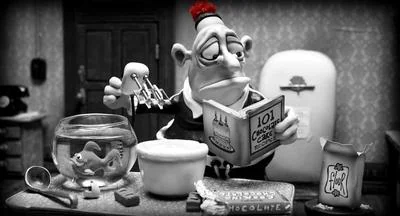
Aesthetic pleasure does not seem to exist in the world of Mary and Max, where every character is uglier than the one before. Every person and animal suffers from some kind of deficiency, be it physical or psychological, but usually both. The world itself is cast in a dreary grey, reflecting the colorless nature of the lives of its inhabitants. It is as if director Adam Elliot aimed to instill depression in all of his viewers, as the bleakness of Mary and Max would bring down even the most joyous spirit. Mary is a tubby wallflower with crooked glasses and an alcoholic mother, while Max is an obese hermit with Asperger’s syndrome. Their connection is an unlikely one as both protagonists live on opposite ends of the planet, yet somehow they manage to bring some color into each other’s lives. The ugliness in Mary and Max borders closely on cuteness, as the disproportions of the characters invoke pity rather than disgust. Especially Mary, whose youthful face is still somewhat unsoiled by the gloomy reality of everyday life, displays a puppy-like glee, despite her dreary surroundings.
Mary and Max makes even the viewer feel somewhat lonely. The ugliness of both characters and scenery creates a felt reality of isolation, one that truly gets to you.
Entry 6: Everything Everywhere All at Once
The Zaniness of Absurdity
One cannot help but wonder whether the creators of Everything Everywhere All at Once started with the idea to have three grown adults fight over who gets to insert an award shaped like a butt plug into their rectum and based the rest of their story around it. Although the film is ultimately touching and moving, the zaniness is what sells its premise. The absurd notion that people can shift from one universe to the other by performing outrageous and random acts such as professing their love to a tax agent turned sumo wrestler is a persistent source of hilarity throughout the narrative. At one point protagonist Evelyn has hot dogs for hands, moments later she is a rock in a universe where life never managed to emerge. And then there is the bagel, in which Evelyn’s daughter Joy has inserted all possible universes. Somehow it all makes sense. What truly sells the zaniness is the dynamic between Evelyn and her family, who never interrupt their bickering despite the chaos and absurdity that unfolds around them. The contrast between the family drama and the threat of the end of the universe never fails to entertain. A film title has never been more accurate.
Entry 7: Midnight in Paris
The Beauty of Living in the Present
Gil I don’t get here often enough, that’s the problem. Can you picture how drop dead gorgeous this city is in the rain? Imagine this town in the ‘20s. Paris in the ‘20s, in the rain. The artists and writers!
Gil says goodbye to Adriana, the angelic muse he fell in love with during his stay in the 1920s. He thought he traveled to the golden era of Paris, a little island in time where the stars aligned to create the center of the universe, home to all the great artists and writers. But during his interactions with the people of that time, he comes to realize that they share the same sentiment, that they too long for a time in the past.
Paul Nostalgia is denial - denial of the painful present... the name for this denial is golden age thinking - the erroneous notion that a different time period is better than the one one's living in it's a flaw in the romantic imagination of those people who find it difficult to cope with the present.
Gil walks along the Pont Alexandre III. The Eiffel Tower stands prominently in the background, accompanied by a collage of colorful lights. The nostalgia he had for the 1920s covered the city like a well-made dress, one that accentuated its best features and obscured its shortcomings. But now that Gil is back in the present, Paris’ beauty appears to carry more significance. It is no longer an artwork shaped by his own imagination, but a real place, along with its virtues and flaws.
Entry 8: The Midnight Gospel
The Weirdness of Unmet Expectations
There are many things that are weird about The Midnight Gospel. For starters, it is an animated podcast featuring guests from different universes. In the second episode, protagonist Clancy stumbles across a race of baby clowns, who slaughter deer-dogs for the purposes of energy and consumption. Towards the end of the story, a full-blown war breaks out between the clowns and a race of insect-like creatures. This story in itself would be weird to most that come across it, although predecessors like Rick and Morty and Adventure Time already established what one might refer to as absurd sciencefiction. No, it is not the wacky and nonsensical narrative that qualifies The Midnight Gospel as weird. Rather, it is the fact that the story is not the focal point of the series. The characters barely react to the torments they are subjected to and instead engage in conversations about topics like Christianity and cancer. The Midnight Gospel plays with the narrative expectations of its viewers and turns them on their head. The resulting experience is unfamiliar and alienating. Even weirder is when one of the deer-dogs brings up a trip to India, shattering the fourth wall and therefore the boundaries between our world and that of The Midnight Gospel.
Entry 9: Her
The Superficiality of Prettiness
Theodore lives in a tidy little apartment in a clean city where everyone appears to be well dressed and civilized. He works in a romantic little company that writes personal letters for people who cannot do it themselves. Everything is arranged in an impeccable harmony, color coded to perfection and displayed through a saturated filter, reminiscent of the ones used to invoke the romance of Paris. Her is essentially a hallmark card in the form of a film. The pastel color scheme pleases the eye and is abused into oblivion. Every building looks like the inside of a birthday cake. Every woman in the film is breathtakingly gorgeous, every haircut flawlessly groomed. And yet, nothing quite manages to hold the attention. When everything is pretty, is it really a quality to admire? In the world of Her, prettiness has crept into every corner and crevice, instilling itself into everyday objects and settings to the point where one craves some form of imperfection. Perhaps it is this same superficiality that causes Theodore’s struggle to find a true connection in this world. When everything is about appearances, substance is a scarcity.